

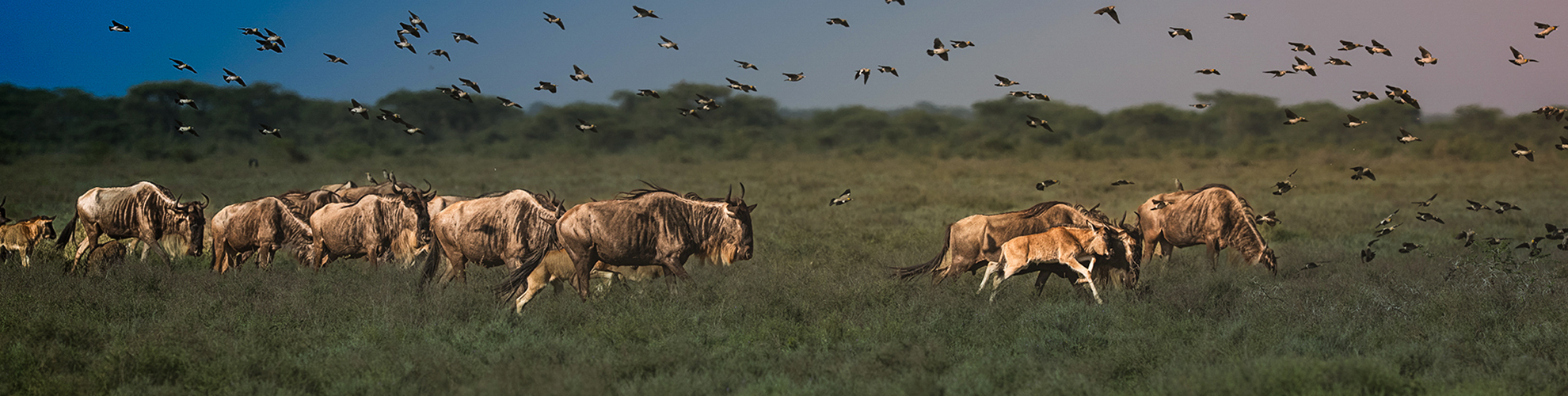
The calving season in the Ndutu Region typically runs from late December through early March, with the peak concentrated in February. This is the moment when the southern plains transform into a vast natural nursery, as hundreds of thousands of wildebeest give birth within a remarkably short window. For travelers seeking raw, unscripted wildlife encounters, this is one of the most rewarding times to be in East Africa.
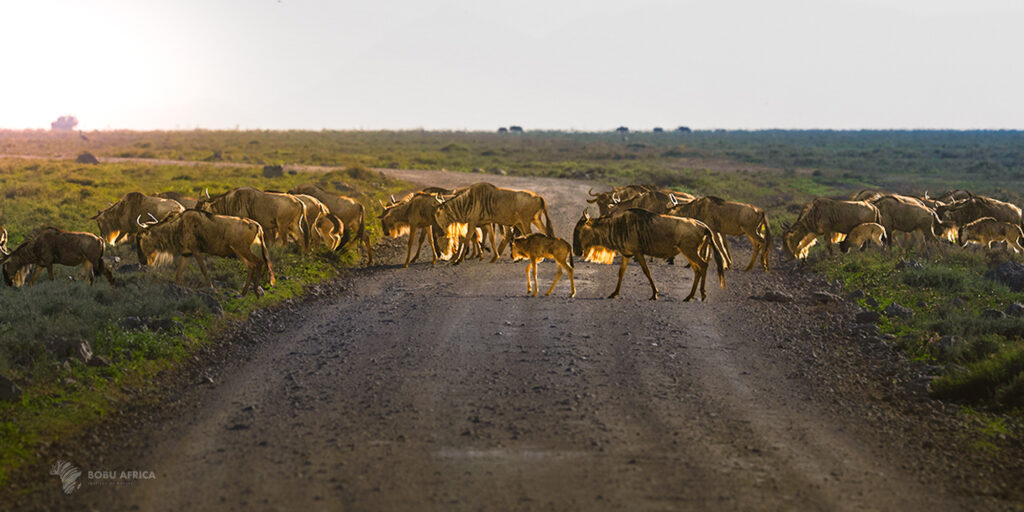
At Bobu Africa, we often tell our guests that Ndutu is where the Great Migration truly begins—not in motion, but in life itself. While many travelers associate the migration with dramatic river crossings, the calving season offers something deeper and more consistent: the origin of the cycle. Within just a few weeks, over half a million calves are born, some days seeing thousands of births unfold across the plains. The scale is staggering, but what makes it extraordinary is the immediacy of survival. A newborn wildebeest will stand within minutes and attempt to run within hours, instinctively adapting to an environment where predators are never far away.
This seasonal movement is part of the larger rhythm of the Great Wildebeest Migration, a continuous journey shaped by rainfall patterns and grazing conditions. From December to March, the herds settle in Ndutu and the southern reaches of Serengeti National Park, drawn by the nutrient-rich short grasses that emerge after the rains. These plains, formed from volcanic soils, provide the ideal conditions for lactating mothers and their young. As the calves gain strength, the herds gradually begin their journey northward, eventually reaching the Maasai Mara National Reserve between July and October before circling back south again. Understanding this connection allows travelers to appreciate Ndutu not as a standalone destination, but as a critical chapter in a much larger ecological story.
What sets the calving season apart is the intensity and predictability of wildlife behavior. Unlike river crossings, which can be dramatic yet unpredictable, Ndutu offers continuous, day-long activity. Predators are highly active during this time, drawn by the abundance of vulnerable prey. Lions, cheetahs, hyenas, and occasionally leopards patrol the plains, creating a dynamic landscape where every moment holds potential. This is not simply about witnessing a hunt—it is about observing the full spectrum of behavior: the patience of a stalking predator, the alertness of a mother, the confusion of a newborn taking its first steps, and the collective movement of thousands responding to unseen cues.
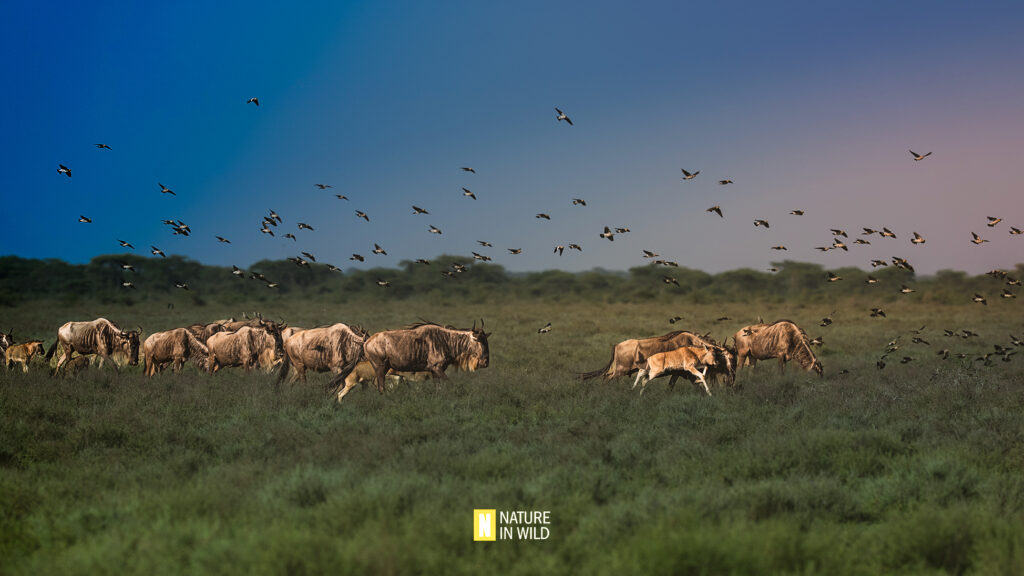
For photographers and wildlife enthusiasts, Ndutu demands a more intentional approach. The experience here is less about chasing sightings and more about understanding patterns. At Bobu Africa, we guide our guests to focus on behavior rather than isolated moments. The most compelling images often come from subtle interactions, mother and calf bonding, the tension before a chase, or the quiet resilience after survival. Light also plays a critical role. Early mornings in Ndutu are soft and atmospheric, perfect for capturing emotion, while late afternoons bring contrast and drama as dust rises across the plains. Midday, often overlooked, can be ideal for high-action sequences where clarity and speed matter most.
Timing your visit within the calving window can significantly influence what you experience. Late December and early January mark the arrival of the herds, with pregnant females dominating the landscape. By mid to late January, the first births begin, building steadily toward the peak in February when the plains are at their most active. March offers a transitional phase, where calves are stronger and the herds begin preparing to move on. Each period has its own character, but for those seeking the most concentrated action, February remains the optimal choice.
There is also a strategic brilliance behind why wildebeest choose Ndutu for calving. The open plains allow for clear visibility, reducing the element of surprise from predators. More importantly, the synchronization of births, known as predator saturation, ensures that while some calves are inevitably lost, many survive simply due to overwhelming numbers. It is a powerful reminder that what may appear chaotic is, in fact, a finely tuned survival mechanism shaped over thousands of years.
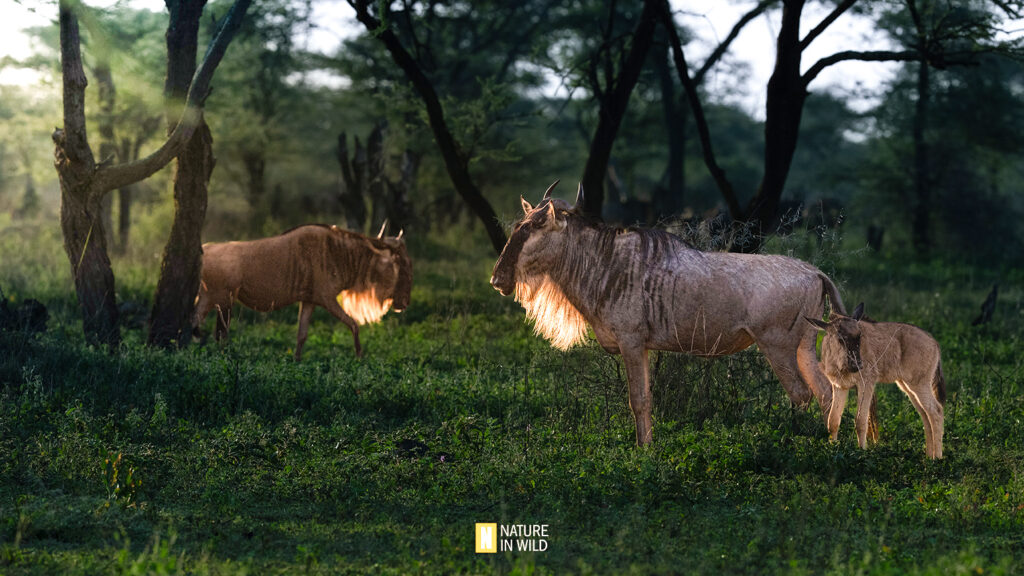
For many of our guests, Ndutu becomes more than a safari destination, it becomes a perspective shift. It offers a quieter, more immersive alternative to the often crowded river crossing scenes, without sacrificing intensity. Here, you are not waiting for a single dramatic event; you are immersed in an ongoing story where every hour reveals something new. It is particularly well-suited for travelers who value depth over spectacle, whether you are a first-time visitor seeking meaningful wildlife encounters or a seasoned safari-goer looking to engage with the migration on a more intimate level.
In its essence, Ndutu calving season is about beginnings. It is where life emerges, where instinct takes over, and where the delicate balance between survival and loss is on full display. Experiencing it with the right timing, guidance, and understanding transforms it from a simple safari into something far more profound.
Plan Your Journey
If you’re considering this journey, the key is aligning your travel dates with the peak activity and working with a team that understands the nuances of the region. At Bobu Africa, we design each Ndutu experience to position you in the right place at the right time, whether your focus is photography, wildlife behavior, or simply witnessing one of nature’s most remarkable events unfold naturally.